

How to Properly Maintain Coffee Espresso Machines
There are a few things to remember when choosing an espresso machine. Depending on your preferences and budget, there are a variety of options to choose from.
Espresso machines let you manage important aspects like the temperature of the water and pressure. Some espresso machines come with dual boilers so you can steam the milk and make coffee at the same time.
Cost
A coffee machine and espresso maker is a significant investment but it will be worth it in the long in the long. You can make your own espresso, as well as other specialty drinks at home. You'll not only save money, but you will also avoid waiting in line at a cafe, and cut down on time and gas.
Espresso machines are available in various dimensions and shapes, based on the level of automation. The simplest models require you to manually push down on the portafilter to tap the beans in the ground, whereas others have an electric pump that does much of the work. The most popular models include steam wands to heat and frost milk, as well as a large drip tray.
A gauge of pressure at the front of the machine will indicate the operating pressure for the boiler and pump. It is important to check this gauge regularly to ensure that your machine is working properly.
Most espresso machines are compatible with both coffee grounds and coffee pods. However, most people prefer fresh ground beans. They are generally more flavorful and can be stronger or weaker brewed, unlike coffee pods, which are pre-packaged and may offer less control over the quality of your cup. It's entirely up to you, but it's important to keep in mind that pods will become more expensive over time if you opt to use coffee grounds instead.
Convenience
A coffee espresso machine can be used to make the majority of your espresso drinks. Based on the model you select it can also be used for latte art or other special drinks. The use of an espresso maker can help you save money by not having to spend money at coffee shops.
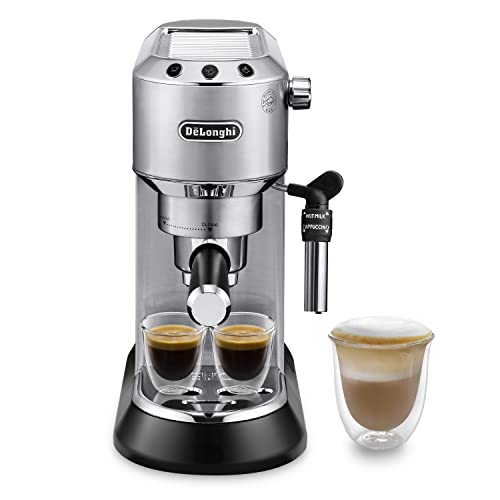
Espresso machines can be used either with pods or grounds of coffee. Grounds can be more flavorful and offer more flexibility, but they will require some effort to prepare, since you'll need to measure the amount of beans and grind them up fine by hand. The pod-based machines are quick and simple to use, however, they're not as delicious as espresso that is made with ground.
Think about a semi-automatic coffee maker which can be programmed to brew at certain times. Coffeee can set the timer and then let the machine to brew your coffee while you are doing other things. If you're planning to brew more than one cup at a time, consider a dual boiler system that has two boilers that can be used for steaming and brewing.
You can also pick a capsule-based espresso machine which is the most convenient option. These machines come with pre-packaged capsules of espresso. They also have reservoirs that need to be filled. There are models that have built-in milk frothers and removable, dishwasher safe milk hoppers.
Quality
When properly utilized when it is properly used, espresso machines can produce a cup of coffee that is rich in flavor and aroma. The quality of the coffee is affected by many factors like the size and temperature of the ground. If the grind is too coarse it will flow too quickly and the aromatic flavor is not fully extracted, while a too fine grind will result in a weak bitter or bland beverage.
Espresso machines use high pressure to push hot coffee water quickly through finely ground and packed coffee grounds. This results in the distinct flavor that comes from an espresso shot. This method can also be used to make regular coffee, which is typically less potent but equally delicious, thanks to the way the grounds are packed and ground.
Portafilters of different sizes and quality, where the brewed steam and espresso is drawn into the cup also affect the quality of an Espresso. It is important to choose an excellent portafilter, since it can affect the consistency of espresso as well as steam.
Automated espresso machines can be programmed and brew at the touch of an button. They can make drinks in different sizes. Semi-automatic and manual espresso machines permit the operator to control various aspects of the brewing process including when to cut the shot and the pressure applied on the grounds. These machines require more maintenance, but provide the best results in our Lab tests.
Maintenance
The price and convenience of coffee espresso machines are attractive to many businesses, however the quality and quality of their drinks depend on the level of care they receive. Establishing a routine cleaning schedule for these small machines will ensure they'll continue to serve high-quality drinks and shots for years.
The drip tray is the most important thing to do in regular maintenance. It collects espresso and the milk residue after each use. This can be done as often as every day, based on the model and how you use it. You should also clean the portafilter, group head, and water screen on a regular basis. They are prone to dirt build-up that can cause low extraction and rancid taste in your coffee.
Cleaning tasks for the week include rinsing the group head and filter basket, and cleaning the steam tip and portafilter using a soft nylon brush. Also, clean the buttons and head gasket using a non-abrasive cleansing agent. Business owners should soak their items such as the drip tray and gratings for the night according to the manufacturer's guidelines.
Some manufacturers recommend descaling their products on a regular basis, however the frequency can vary depending on the hardness of your water supply and how often you use your machine. When descaling, start by filling the reservoir with a solution for descaling- following the product's instructions on how much you should add.